

Divisive discourse comes as a result of a player being inherently different.
The wide range of skills possessed by some of the greatest in the league today display limited similarities to one another.
It’s why even at its core, NBA fans just aren’t on the same wavelength anymore. Not that they ever were.
Talent disparity is one of the most prevalent debates in the current basketball world.
Whether it’s in the form of comparing the modern era to a previous one, or justifying the need for eventual expansion, people can’t seem to agree on the amount of talent in front of them.
It’s part of why there’s less appreciation for imperfect players.
Dyson Daniels of the Atlanta Hawks is far from perfect, but he’s one of the most impactful players in the NBA.
Presence can outweigh production, but how do we, as people who consume the product the most, identify what production actually entails?
Is it the numbers?
That’s part of it. It never made sense to turn a blind eye to statistics. It’s numerical proof of on-court effectiveness.
More than what’s on the stat sheet, though, a player’s impact can be determined by how much better their team is when they’re on the floor versus off.
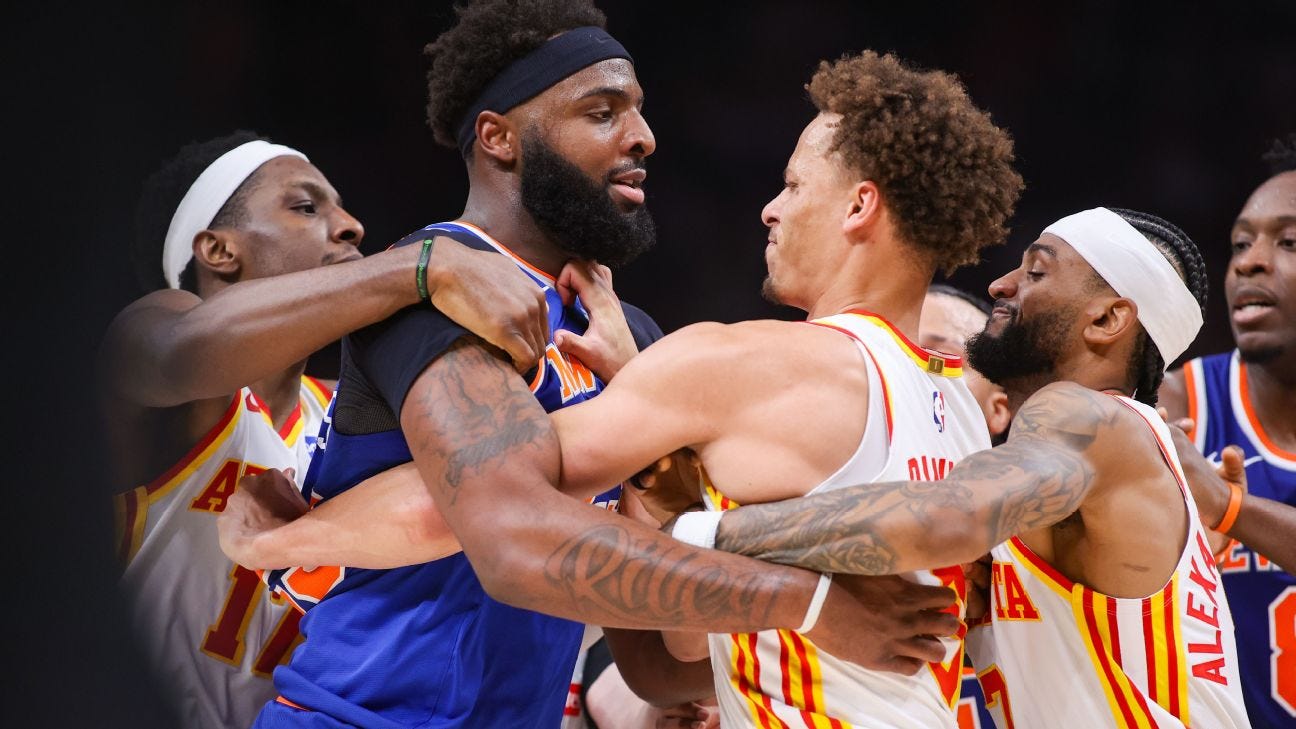
Daniels is an anomaly.
Amidst his strengths — most notably his defensive tendencies that frustrate the living hell out of his opponents — he’s controversial.
And it’s not just a situation of the national media not paying a lick of attention to the Atlanta Hawks, resulting in the worst parts of Daniels’ game shaping his entire perception, it also falls onto a lot of those who watch him the most.
In the heat of battle — whether it’s because of back-and-forth between fanbases or a game so intense that there’s an incredibly slim margin for error — it’s easy to point blame on someone who clearly struggles at a key aspect of his team’s nightly attack.
What they’re forgetting, though, is that Daniels’ recent campaign was an outlier.
Maybe in terms of some of his excellence, too, but young players should always get the benefit of the doubt when assessing potential.
He shot above 30% from beyond the arc in three of his four NBA seasons. He saw higher volume in each year, as well. 34% in his first season in Atlanta was no fluke.
Why would his upward trajectory stop now?
It’s not to say his lack of an outside shot didn’t hurt the Hawks last season, because it did, but even with it limiting some of what he could do offensively, he had his best NBA season.
It’s difficult to recall another time when a player was arguably the worst at his position in a specific category for an entire year, yet still had an incredibly productive season where he was his team’s most impactful player.
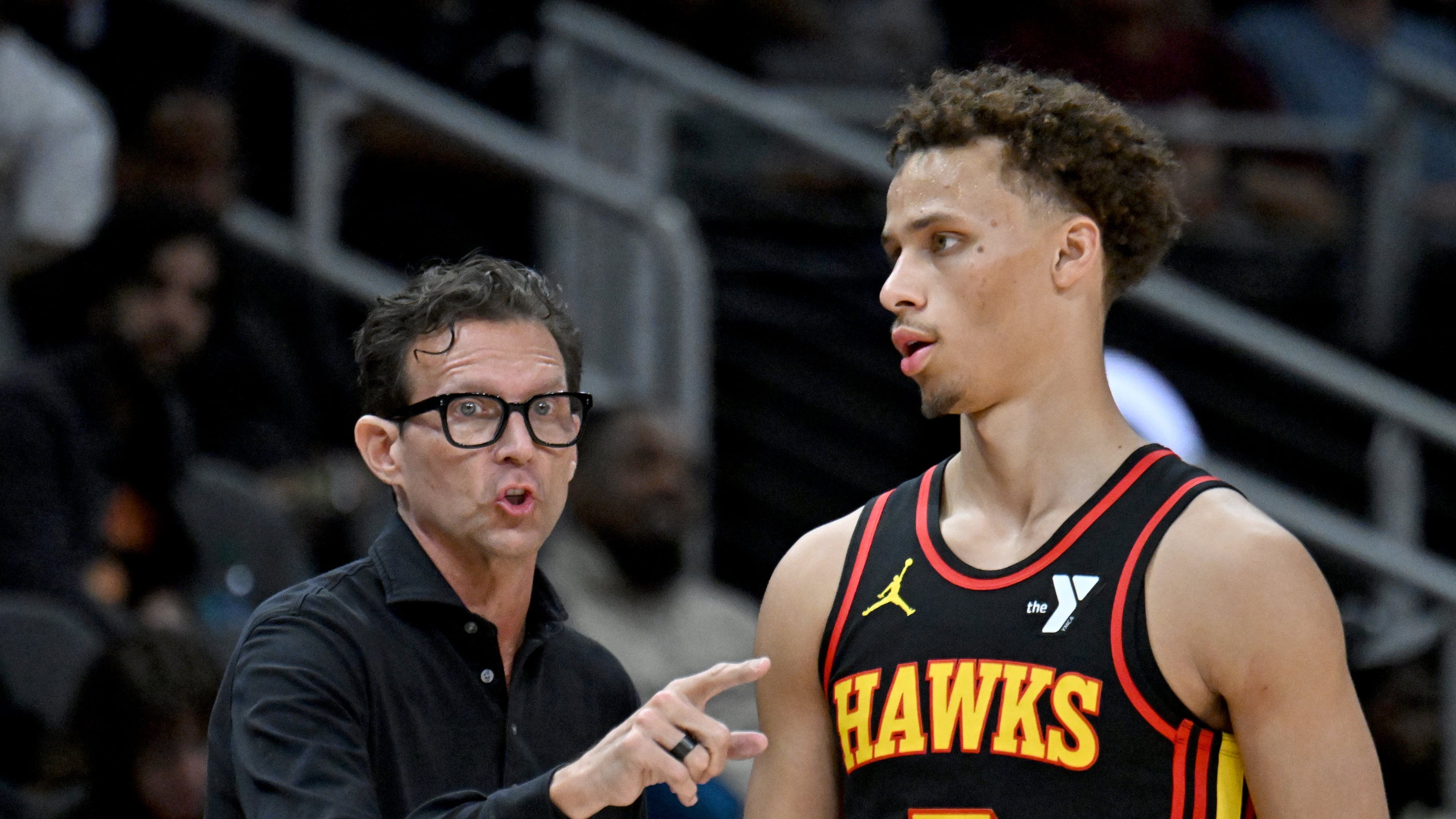
Daniels opens up everything for Atlanta’s offense, while being one of the league’s most elite perimeter defenders.
Part of why the Hawks were so willing to move on from Trae Young — one the greatest players in their franchise’s history — was because of the plethora of talented young playmakers already on the roster.
They didn’t need a lone floor general when they had several ready to take off.
None are as quality of passers as Young, but they don’t need to be.
Daniels averaged six assists per game last season, committing less than two turnovers a night.
His feed decisiveness has gone up every year, as has his impact.
Sharp cutting allows him to get open, which often opens up a more effective shooter. It’s an impressive chain reaction.
He’s a quality finisher, as well. He converted nearly 70% of his looks at the rim last season.
Head Coach Quin Snyder runs a bulk of their offense through Daniels and his ability to get to the rim, as well as Onyeka Okongwu. Ironically enough.
Another player whose impact is a heavy topic of discussion among fans, Okongwu acts as a hub for Atlanta’s offense. He and Daniels share one of the league’s most underrated and effective two-man games.
The incredible vision possessed by each of them gives the Hawks a unique advantage, and is a big reason they were able to steal two games on the eventual-champion New York Knicks.
When either of them struggle, though, there’s no shortage of pointing fingers.
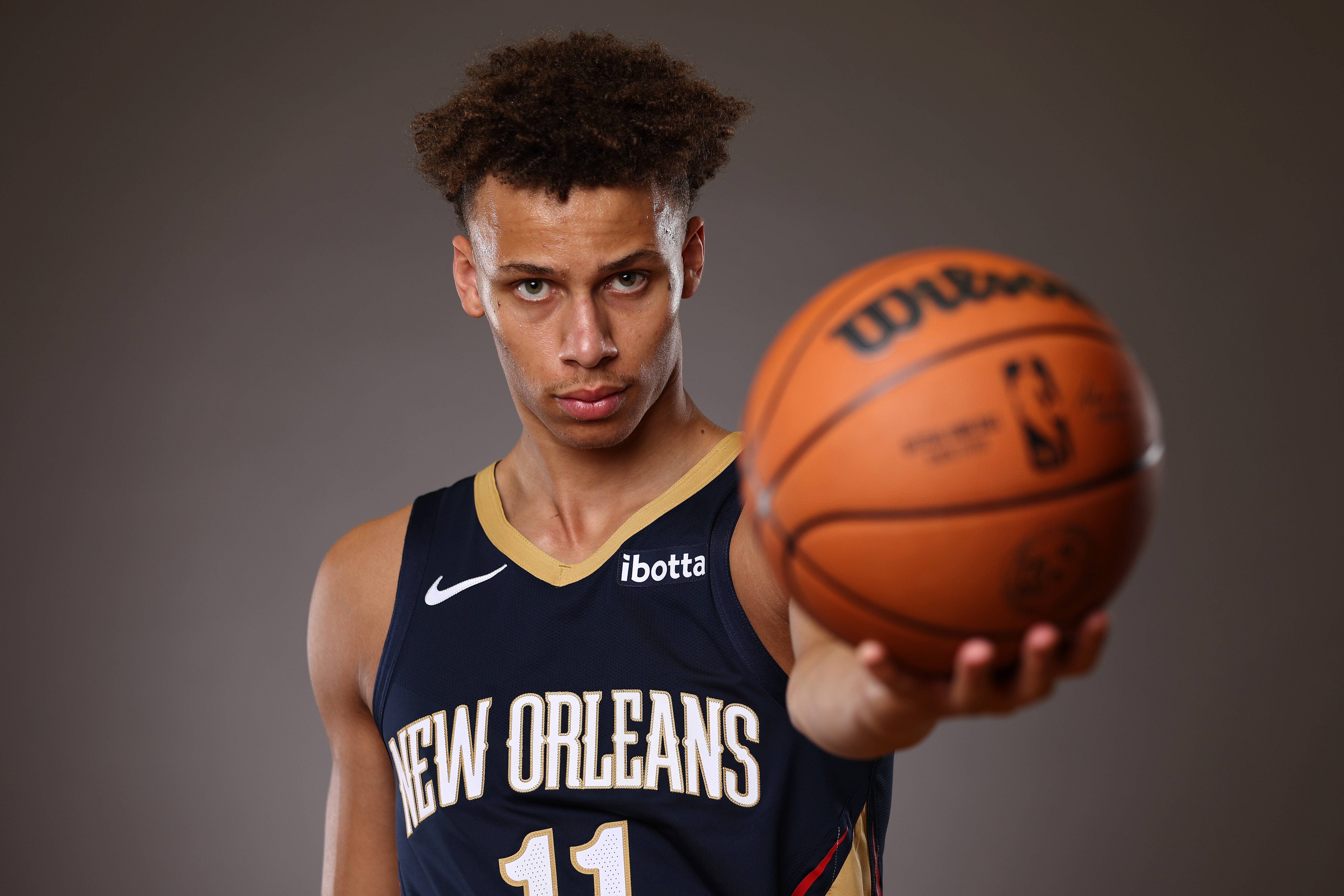
Atlanta knew what they were getting into when they traded for Dyson Daniels.
They cut ties with Dejounte Murray — a proven weapon with two-way potential — to bring in a project.
They’ve done what all franchises should do with players who clearly need time to develop. They’ve let him develop.
He’s not close to done, either.
His outlier season from deep shouldn’t cloud what’s been quite the upward trajectory.
Anytime a player can lock down anyone in the league — yes, anyone — there’s room for them on a roster.
When they’re incredibly impactful on the offensive end, as well, they’re worth what Daniels is making. Contrary to popular belief.
It, of course, wouldn’t be ideal if he shot sub-20% from the outside again, but even if he does, it’s time to start looking at his impact beyond the immediate metrics.
In what’s quickly become a popular theme on The Infinite Possession, patience, once again, out-rules all.
There’s no reason to stop giving Dyson Daniels the benefit of the doubt.